


BPC-157 Half-Life: Why It Clears in Minutes, Not Hours

BPC-157's plasma half-life is measured in minutes, not hours. The primary pharmacokinetic study found an average elimination half-life of 15.2 minutes in rats, and the same work reports a confirmed half-life of under 30 minutes across the animal species studied and in the one available human study.
That is a significant correction to the figure that circulates most often — around 4 hours — and it changes the dosing logic entirely.
The correction
| Source | Reported half-life |
|---|---|
| Commonly repeated figure | ~4 hours |
| Published PK study (rats) | 15.2 minutes |
| Animals + the one human study | < 30 minutes |
The widely quoted four-hour figure does not match the primary data. What the pharmacokinetic work shows is a peptide that is rapidly cleared from plasma — degraded by normal protease activity within minutes.
The practical consequence: once-daily dosing leaves most of the day uncovered. The protocol that follows from a half-life this short is twice-daily administration, which is what the research literature and most product guidance describe.
Does the short half-life mean it doesn't work?
This is where the pharmacokinetics get interesting — and where most summaries go wrong in the other direction.
BPC-157's plasma half-life is very short, but its biological effects persist far longer than the drug's presence in blood would suggest. This is a known pattern with BPC-157 research: measured outcomes in tissue healing continue well past the point at which the peptide has cleared circulation.
The likely explanation is that BPC-157 acts through downstream signalling rather than through sustained receptor occupancy. It activates the VEGFR2 pathway — driving angiogenesis, the formation of new blood vessels — and once that process is initiated, the effect continues without the peptide needing to remain present.
So the short half-life is not an argument that BPC-157 is ineffective. It is an argument that frequency matters more than total dose. A single large dose and several small ones do not produce the same exposure profile.
This is a genuine PK/PD disconnect: the pharmacokinetics (how the drug moves) and pharmacodynamics (what it does) do not line up on the same timescale.
Dosing that follows from the half-life
| Route | Typical frequency | Rationale |
|---|---|---|
| Subcutaneous injection | Twice daily | Matches the short plasma half-life |
| Intramuscular injection | Twice daily | Same reasoning |
| Oral | More frequent still | Stability in the gut, but fast systemic clearance |
Published protocols commonly describe 1–10 mcg/kg twice daily. Splitting the daily total into two administrations keeps exposure more continuous than a single dose would.
If you are used to peptides with longer half-lives — where once- or twice-weekly dosing is normal — this is the opposite pattern. BPC-157 is a high-frequency peptide.
Route: oral versus injection
Oral. BPC-157 is unusually stable in gastric acid, which is what made the peptide interesting in the first place — its parent compound was isolated from human gastric juice. Oral administration is the route used in the gastrointestinal research, where the target tissue is the gut itself.
Subcutaneous or intramuscular. For tissue repair outside the gut — tendon, muscle, ligament — injection is the route described in the research. Injection bypasses the digestive tract entirely and delivers the peptide systemically rather than to the gut lining.
Neither route produces lasting plasma levels, because the clearance is fast either way.
Reconstitution and storage
BPC-157 is supplied as lyophilised powder and reconstituted with bacteriostatic water.
· Powder: stable at room temperature, protected from light
· Reconstituted: refrigerate at 2–8 °C, do not freeze
· Add water down the side of the vial and swirl — do not shake
The reconstituted solution should be used within the period stated on the vial. Given the peptide's poor plasma stability, there is no benefit to storing it longer than necessary.
What the evidence base actually is
BPC-157 has a substantial preclinical literature — well over a hundred animal studies covering tendon, ligament, muscle, bone, gut, cornea and nerve healing. Several show striking effects in rat models.
The human evidence is close to absent. There are no large randomised controlled trials, and the research is disproportionately from the single research group in Croatia that developed the peptide. A 2025 narrative review — "Regeneration or Risk? A Narrative Review of BPC-157" — reaches the same conclusion: promising preclinical signals, insufficient human data.
That matters for how much weight to put on any dosing protocol, including the one above. The half-life data comes from animal pharmacokinetics. The dosing frequencies are extrapolated from it, not established in human trials.
FAQ
What is the half-life of BPC-157?
Around 15 minutes in rat plasma per the primary pharmacokinetic study, with a confirmed half-life of under 30 minutes in the animal species and the one available human study. The commonly quoted "4 hours" figure does not match the published data.
Does the short half-life mean BPC-157 doesn't work?
No. BPC-157's biological effects outlast its presence in plasma, because it acts through downstream signalling — particularly VEGFR2-driven angiogenesis — rather than through sustained receptor occupancy.
How often should BPC-157 be injected?
Twice daily is the standard, at roughly 1–10 mcg/kg per dose. A half-life measured in minutes does not support once-daily dosing.
Is BPC-157 effective orally?
It is unusually stable in gastric acid, which is why oral administration is used in the gastrointestinal research. For tissue repair elsewhere, injection is the route described in the literature.
Does BPC-157 need to be refrigerated?
The powder does not — room temperature, protected from light. The reconstituted solution does: store at 2–8 °C and do not freeze it.
Why is the half-life so much shorter than other peptides?
BPC-157 is an unmodified pentadecapeptide, degraded by normal protease activity in the bloodstream. Its unusual property is stability in the gut, not stability in plasma — the two are separate.
Is BPC-157 a steroid?
No. It is a synthetic peptide — a 15-amino-acid fragment of the protein Body Protection Compound — with no structural relationship to anabolic steroids.
Where to buy BPC-157
PandaRoids stocks BPC 157 vials by Dragon Pharma — a 2 ml vial at 2 mg/ml, supplied as lyophilised powder for reconstitution, alongside BPC-157 from Kalpa, Peptide Hubs, Stealth Labs and Axiolabs, plus a TB-500 / BPC-157 blend.
For the related comparison, TB-500 dosage covers a repair peptide with a longer-acting profile, and does BPC-157 increase testosterone addresses the most common claim made about it — which is not accurate.
This article is educational and is not medical advice. BPC-157 is not approved for human use in any jurisdiction.
References
· He L, et al. "Pharmacokinetics, distribution, metabolism, and excretion of body-protective compound 157, a potential drug for treating various wounds, in rats and dogs." 2022 — average elimination half-life 15.2 minutes; plasma stability poor, confirmed half-life under 30 minutes.
· Chang CH, et al. "Pentadecapeptide BPC 157 Enhances the Growth Hormone Receptor Expression in Tendon Fibroblasts." Molecules, 2014;19(11):19066-19077.
· McGuire FP, et al. "Regeneration or Risk? A Narrative Review of BPC-157." 2025.
· Hsieh MJ, et al. "Modulatory effects of BPC 157 on vasomotor tone and the activation of Src-Caveolin-1-endothelial nitric oxide synthase pathway." Scientific Reports, 2020.
Articles
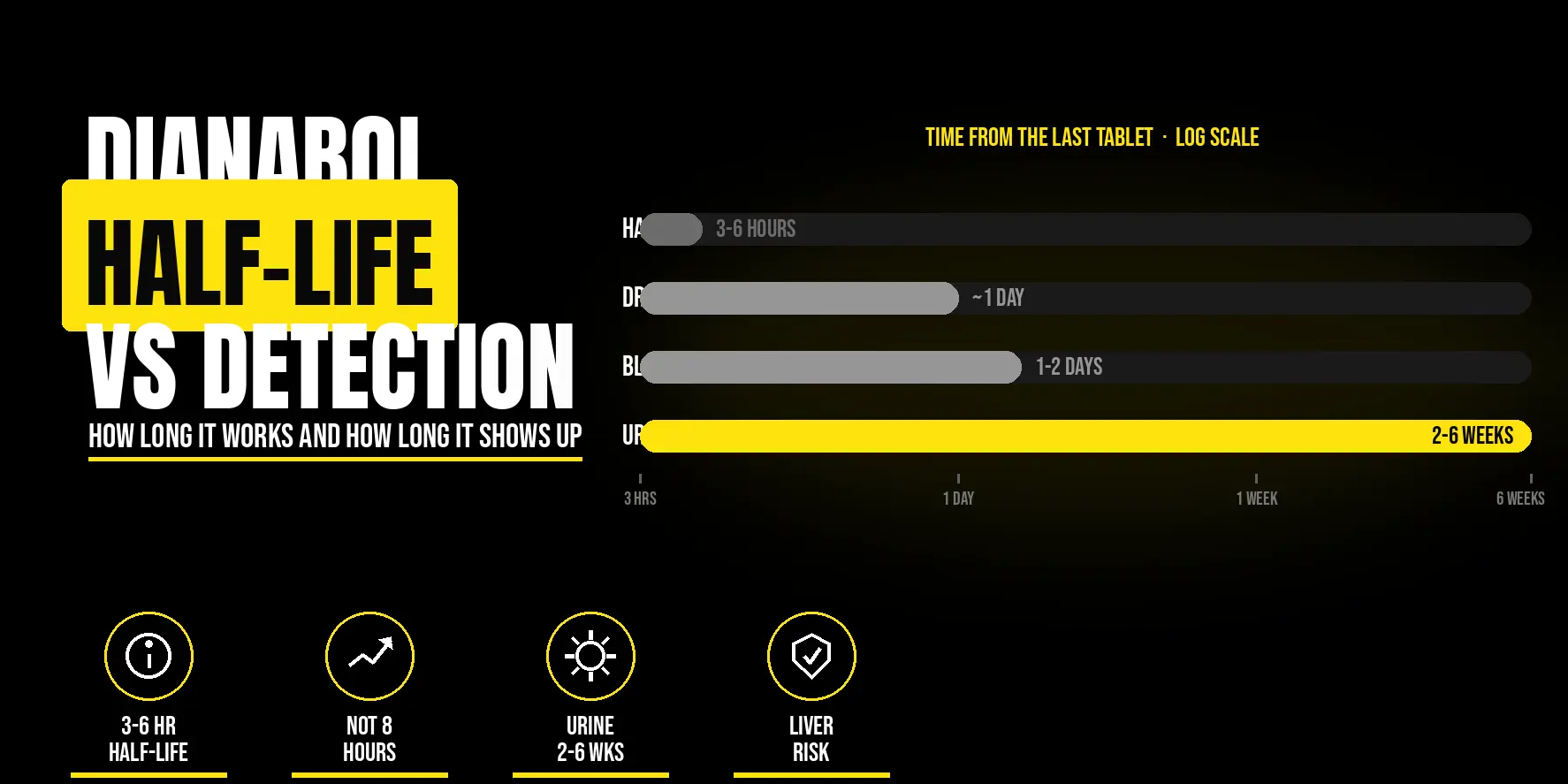
The old version of this page answered the first question and presented it as the second. That is the mistake this article corrects, because it is the one that costs people a test result.
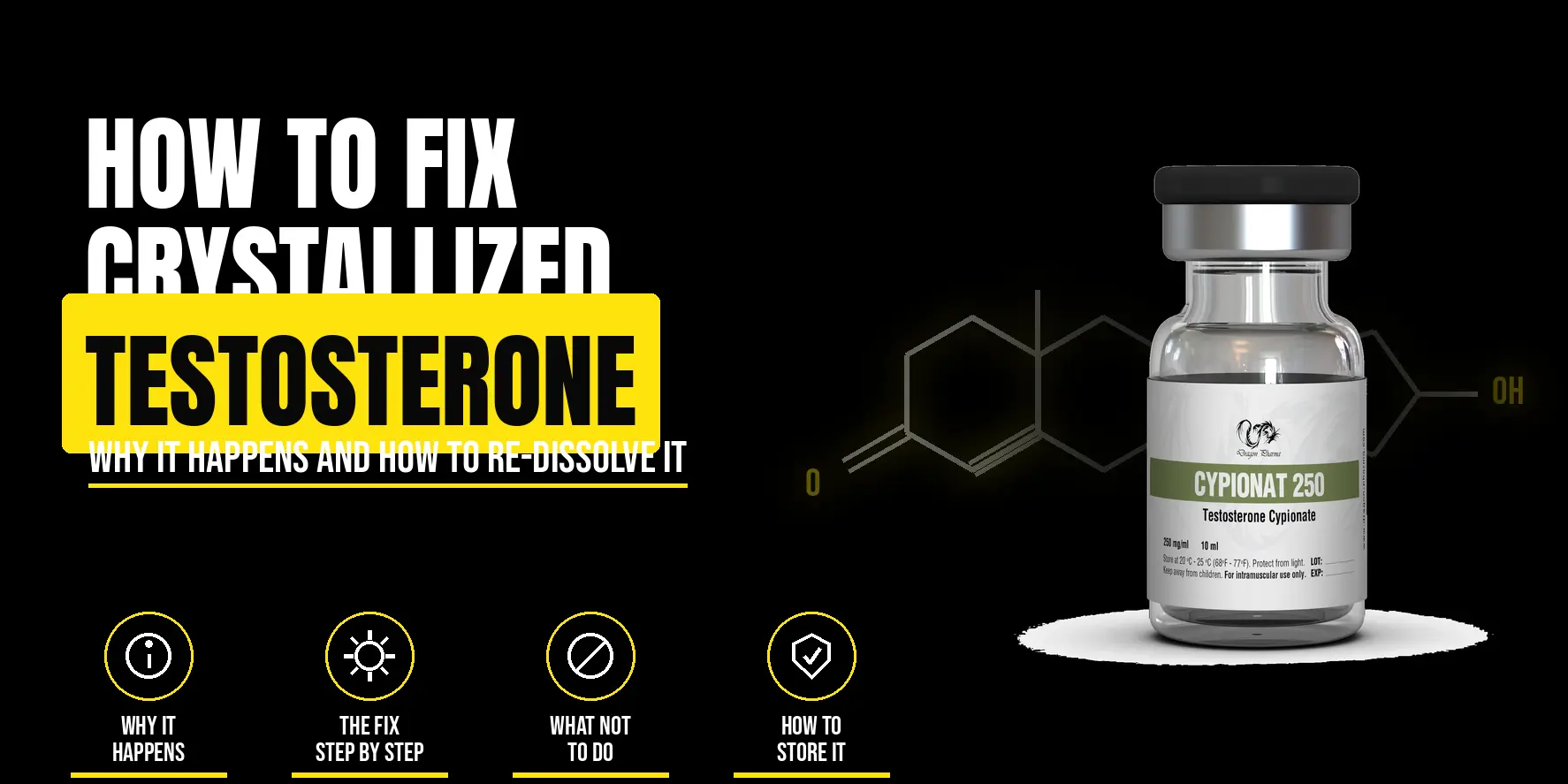
How to fix crystallized testosterone: the method below takes about fifteen minutes and needs nothing but warm water and a plastic bag.
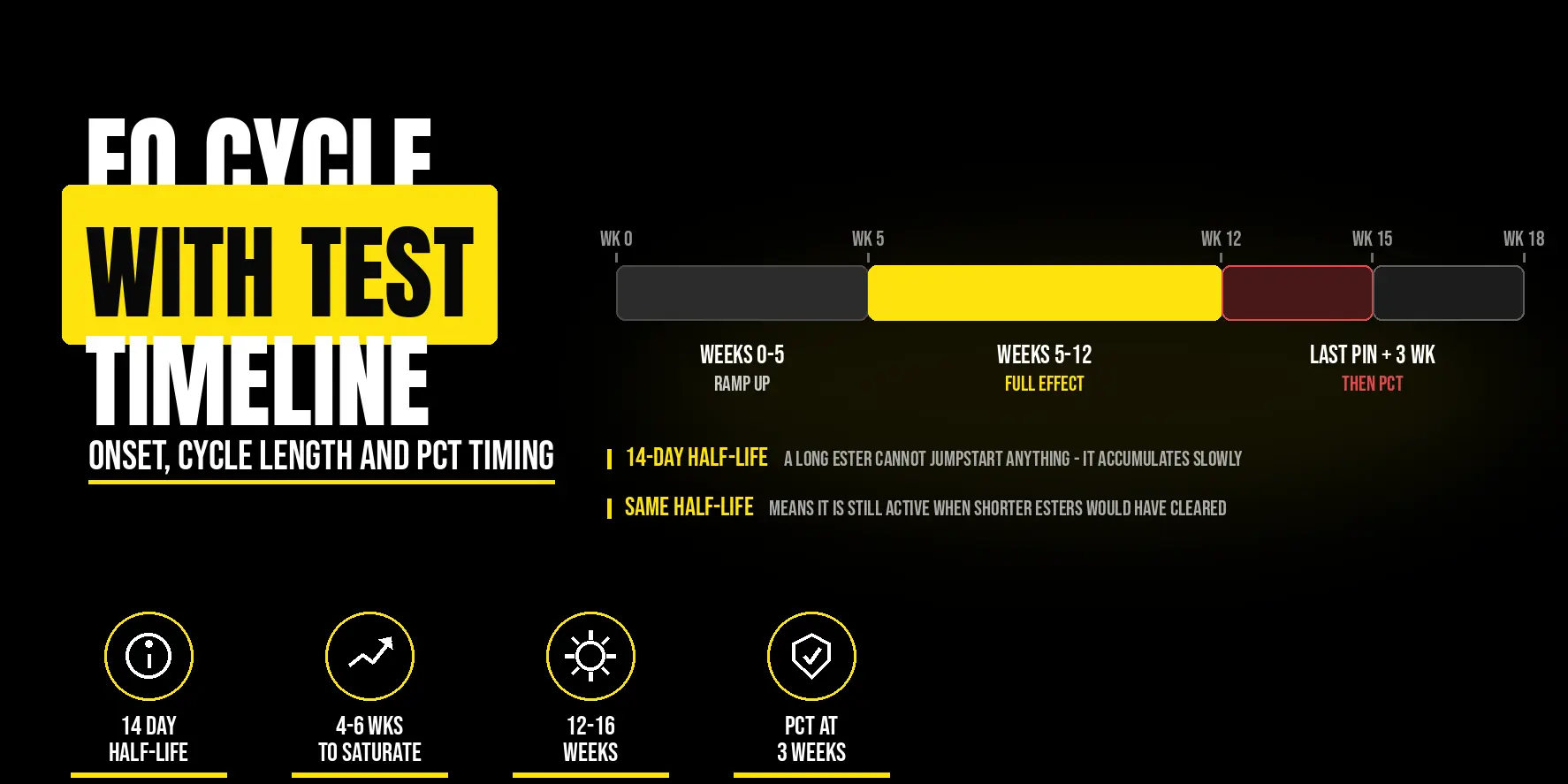
Two things are worth getting straight before the numbers, because most guides on this topic get them backwards: EQ has a very long ester and takes weeks to build up, and its main risk is not estrogen — it is your blood count.
PandaRoids Reviews
Please leave your review on products or service below.
For discounts, please contact us
- This sight is amazing and has everything you need to bulk of or cut down some size.
- Overall i have experienced increase in well being, motivation, strength, weight gain, libido, aggression and great focus. Side effects are not prominent though, just some acne and water. Panda Roids is part of my steroids source list