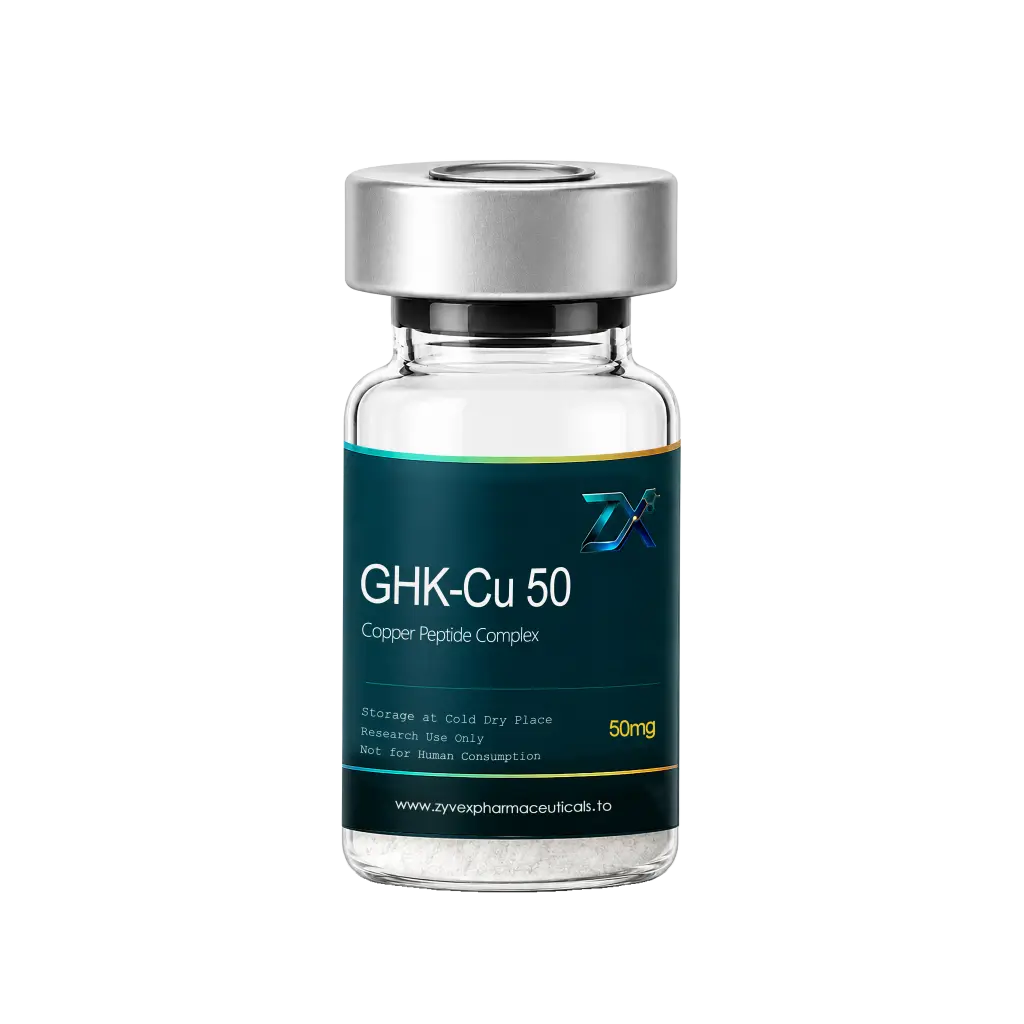
GHK-CU is a copper-binding tripeptide that occurs naturally in plasma and saliva, and it is the one peptide in this catalogue whose main reputation is cosmetic: skin thickness, collagen and wound healing. Zyvex supplies it lyophilised, and it is also used topically by people who mix it into a serum rather than inject it.
It is not an anabolic and has nothing to do with the androgen axis.
| Attribute | Detail |
|---|
| Manufacturer | Zyvex Pharmaceuticals |
| Substance | GHK-CU |
| Strength | GHK-CU, lyophilised powder |
| Form | Sealed vial, reconstitute before use |
| Half-life | Short in plasma, effect is local |
| Class | Copper tripeptide |
| Use | Skin, wound repair, hair research |
| Lab testing | Pending, results coming soon |
| Warehouse | U.S. domestic, 5 to 7 days, or international, cheaper and slower, both to US addresses |
What the Copper Peptide Is Used For
Collagen synthesis and tissue remodelling. GHK-CU upregulates genes involved in repair, and the research spans wound healing, skin quality and hair follicle stimulation.
Users report better skin texture, faster healing of minor wounds and, over months, a change in hair shedding. The evidence is largely in vitro and animal, which is worth knowing before spending on it.
Application matters: topical use targets the skin, injection targets the whole body. The two are different propositions with different expectations.
GHK-CU 50 in a Protocol
Subcutaneous 1 to 2 mg a day for a month is the reported protocol, or 2 mg several times a week for longer. Topically, a small amount of reconstituted solution added to a serum is the common approach.
It is often stacked with BPC 157 or TB 500 for a general repair phase, since the mechanisms do not overlap.
Side Effects & Cautions
Injection site irritation, a metallic taste, and occasional skin redness topically. Copper is a heavy metal, so more is not better and prolonged high dosing is not sensible.
Anyone with a copper metabolism disorder or Wilson's disease should avoid it entirely. Research peptides generally lack long-term human data, and this one is no exception.
Lab Results Coming Soon
GHK-CU 50 ships ahead of its laboratory reports, and that is the honest position rather than a marketing one. No measured figure is quoted, because there is none to quote yet. When the testing is completed, the batch number on the label is what links your vial to it.
GHK-CU 50 Dosage & Usage Guidelines
Reported use is 1 to 2 mg subcutaneously daily for four weeks, then a lower maintenance frequency. Topically, the same vial diluted into a carrier and applied to skin works out to a fraction of a milligram per application.
Reconstitute gently, store cold, and keep the vial out of light. A month is a reasonable trial before deciding whether the cost is justified.
Shipping & Product Authenticity
GHK-CU 50 ships to U.S. addresses only, from whichever of our two warehouses has stock: the U.S. domestic one, which is the dearer of the two and arrives in 5 to 7 days, or the international one, which is cheaper and slower. Neither ships outside the United States, so orders for the UK, Europe, Australia or anywhere else cannot be accepted. It goes out in plain packaging with nothing on the outside describing the contents. Tracking is included, the parcel is sealed, and if what arrives does not match the listing it is replaced.
Storage
GHK-CU 50 is stored cold and dark while dry. After reconstitution it belongs in the fridge, not the freezer, and it should be used within the stated window rather than kept for months. Swirl, never shake, and keep it away from light.
What is GHK-CU?
Zyvex Pharmaceuticals' copper tripeptide, lyophilised in a vial. It is used in skin, wound repair and hair research, not for muscle.
Can I use it topically?
Yes. Many users add the reconstituted solution to a serum. That route targets skin rather than the whole body, so the expectations should differ.
Should GHK-CU be expected to build any muscle?
No. It has no anabolic activity. Any change in body composition comes from elsewhere.
How long until skin changes?
Weeks to months, and modestly. This is not a compound with a fast visible effect.
Is copper toxic?
Copper is a heavy metal, so doses stay small. Anyone with a copper metabolism disorder should avoid it.