


Does BPC 157 Increase Testosterone? The Truth Behind the Claims
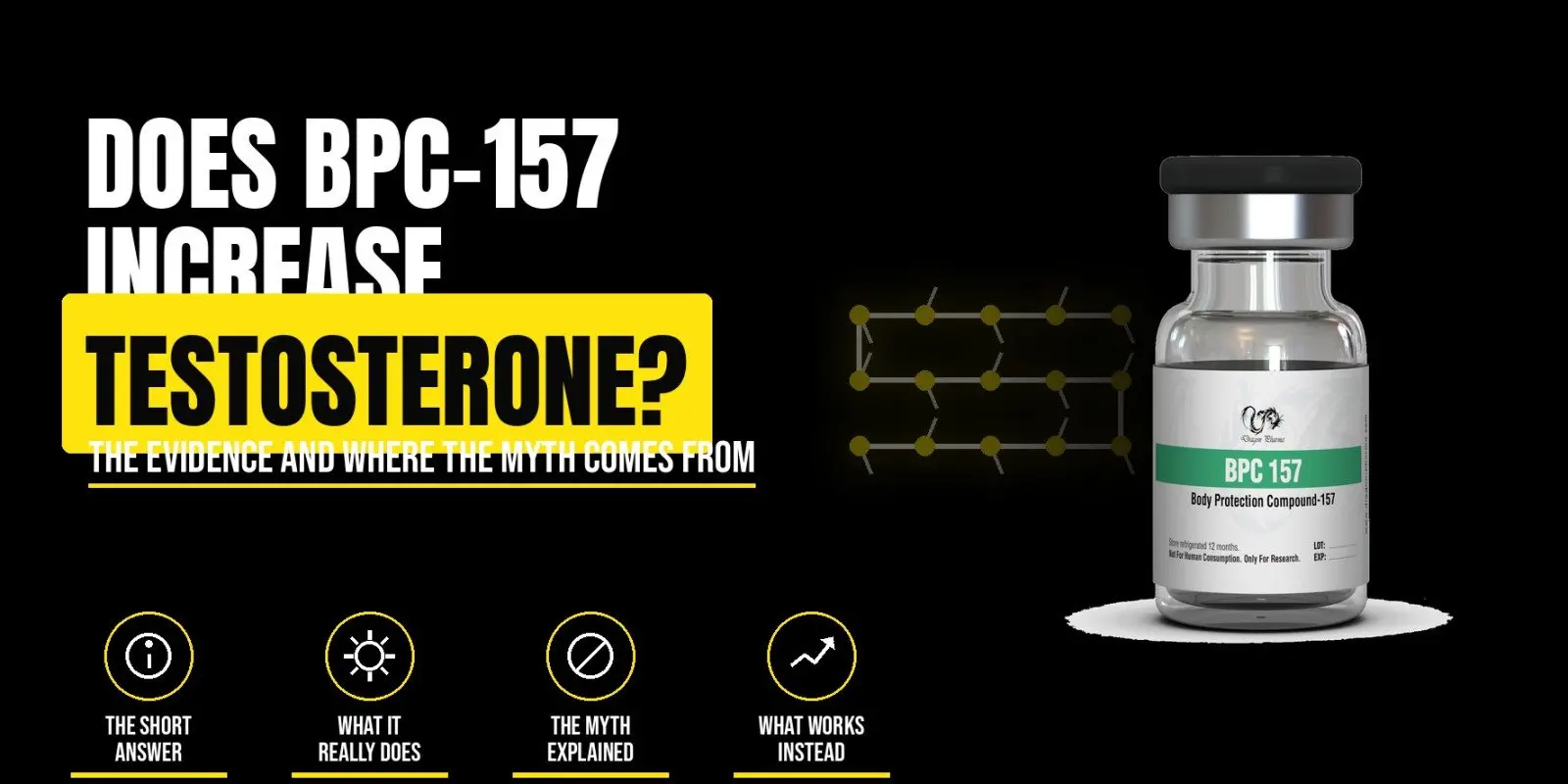
No. There is no peer-reviewed research — in humans or animals — showing that BPC-157 raises total testosterone, free testosterone, or any marker of testicular function. BPC-157 is not an anabolic agent, it does not bind the androgen receptor, and it does not act on the reproductive axis at all.
That is the short answer, and it is worth stating plainly because the internet has spent years implying otherwise. This article explains what BPC-157 actually is, what it demonstrably does, and exactly where the "it raises testosterone" claim came from — because the origin is a real study that says something quite different.
What is BPC-157?
BPC-157 is a synthetic pentadecapeptide — a chain of 15 amino acids — derived from a fragment of a protein called Body Protection Compound, found in human gastric juice.
Sequence: Gly-Glu-Pro-Pro-Pro-Gly-Lys-Pro-Ala-Asp-Asp-Ala-Gly-Leu-Val (molecular formula C₆₂H₉₈N₁₆O₂₂)
It is unusually stable for a peptide: resistant to hydrolysis and enzymatic digestion, and stable at room temperature. That stability is a large part of why it attracted research interest in the first place — most peptides are fragile enough to be impractical.
Note the name: "Body Protection Compound". Not "Body Building Compound". The compound was named for its role in protecting the gastrointestinal lining, and that is where the research started.
What does BPC-157 actually do?
The best-supported mechanism is angiogenesis — the formation of new blood vessels. BPC-157 activates VEGFR2 and drives the Akt-eNOS signalling pathway, which promotes endothelial cell function and new vessel growth. It also modulates nitric oxide synthesis and shows antioxidant activity. The net effect in animal models is faster healing of tissue that depends on good blood supply: tendon, ligament, muscle, bone, skin, and gut mucosa.
That is a repair and protection profile. Nothing in it touches the endocrine system that governs testosterone.
Where the testosterone myth comes from
The claim is not invented from nothing — it is a chain of three misreadings, and each link is worth seeing clearly.
Link 1: A real study about growth hormone receptors. Chang and colleagues published a 2014 study in Molecules titled "Pentadecapeptide BPC 157 Enhances the Growth Hormone Receptor Expression in Tendon Fibroblasts." The finding was genuine: BPC-157 increased the expression of growth hormone receptor in rat tendon cells, which made those cells more responsive to growth hormone.
Read what that study actually measured. It was about receptor density in tendon fibroblasts — not testosterone, not even growth hormone levels. BPC-157 did not produce more growth hormone; it made tendon cells better at listening to the growth hormone already present.
Link 2: "Growth hormone" becomes "hormones" becomes "testosterone". Once the study was summarised as "BPC-157 boosts growth hormone", the next step was the assumption that a peptide which raises one hormone must raise others. Growth hormone and testosterone are entirely separate axes — pituitary/somatotropic versus hypothalamic-pituitary-gonadal. Confusing them is a basic category error, and it is the engine of this myth.
Link 3: Guilt by association. BPC-157 is sold alongside peptides that do act on hormone pathways — ipamorelin and CJC-1295 on growth hormone, kisspeptin and gonadorelin on the reproductive axis. Buyers reasonably assume they all work the same way. They do not.
There is also a simpler driver: BPC-157 genuinely improves recovery. If you heal faster and train harder, you might feel like something hormonal changed. Feeling better is not the same as a raised testosterone level, and the difference is measurable in a blood test — which is exactly why the claim has never survived one.
The evidence base, honestly stated
Two things are true at once about BPC-157, and both matter:
The preclinical evidence is substantial. There are well over a hundred animal studies covering tendon, ligament, muscle, bone, gut, cornea and nerve healing. Several show effects that are genuinely striking in rat models.
The human evidence is close to absent. There are no large randomised controlled trials in humans. The research is overwhelmingly animal-based and disproportionately from a single research group in Croatia that also developed the peptide. A 2025 narrative review — "Regeneration or Risk? A Narrative Review of BPC-157" — reaches the same conclusion: promising preclinical signals, insufficient human data to make clinical claims.
So even setting the testosterone question aside, the honest position is that BPC-157 is a compound with interesting animal data and no established human profile. Anyone asserting it does something specific to your hormones is well ahead of the evidence.
What actually raises testosterone
If raising testosterone is the goal, the mechanisms that work are known — and none of them is BPC-157.
| Mechanism | Targets | Effect on testosterone |
|---|---|---|
| Exogenous testosterone | Direct | Raises it; suppresses natural production |
| hCG | LH receptor | Stimulates endogenous production |
| SERMs (clomiphene, tamoxifen) | Oestrogen feedback at the pituitary | Raises LH → raises testosterone |
| Kisspeptin / gonadorelin | GnRH signalling upstream | Raises LH and FSH |
| Growth hormone secretagogues (ipamorelin, CJC-1295, MK-677) | Somatotropic axis | Raise growth hormone, not testosterone |
| BPC-157 | VEGFR2 / angiogenesis | None demonstrated |
The second-to-last row is where most confusion actually lives. Ipamorelin and CJC-1295 are legitimate GH secretagogues — they act on a different axis and will not move your testosterone in any meaningful way either.
Beyond pharmacology, the variables with the strongest evidence are unglamorous: adequate sleep, not being over-fat, resistance training, and managing chronic stress. Those move the number more than any peptide sold as a shortcut.
If you are actually trying to work out whether your dose is doing anything, 1 ml of testosterone a week walks through the mg-per-ml maths and what the dose-response research shows.
Can you stack BPC-157 with testosterone?
People ask this expecting an interaction warning. There is no known interaction — because the two compounds operate in entirely separate systems. BPC-157 works on angiogenesis and tissue repair; testosterone works through the androgen receptor and the HPG axis.
That does not make stacking a good idea by default. It means the combination has not been studied, and absence of a known interaction is not evidence of safety. They are simply not competing for the same machinery.
FAQ
Does BPC-157 increase testosterone?
No. No peer-reviewed human research shows BPC-157 raises total or free testosterone. It does not act on the androgen receptor or the HPG axis.
Does BPC-157 affect hormones at all?
The only hormonal finding in the literature is the Chang 2014 study showing increased growth hormone receptor expression in tendon fibroblasts — receptor density in cells, not circulating hormone levels.
Does BPC-157 build muscle?
Not directly. It is not anabolic. Any indirect benefit would come from faster recovery of tendon and connective tissue, allowing more training — not from muscle protein synthesis.
What is the best peptide for libido?
Not BPC-157, which has no evidence in that area. Libido is driven primarily by testosterone and dopaminergic signalling; the peptides researched in this context are kisspeptin (upstream of LH) and bremelanotide/PT-141 (melanocortin agonists). Neither is a substitute for diagnosing why libido is low in the first place, and low libido is often not a testosterone problem at all.
How long does BPC-157 stay in your system?
The published half-life is short — hours, not days — which is why research protocols use frequent administration. BPC-157 half-life covers the pharmacokinetics in detail.
Can BPC-157 raise testosterone indirectly by improving sleep or recovery?
There is no evidence for this. Better sleep does support testosterone production, and BPC-157 may improve recovery from injury — but no study has demonstrated a pathway from BPC-157 to testosterone, and the honest answer is that the question has not been tested.
Where to buy BPC-157
PandaRoids stocks BPC-157 by Dragon Pharma — a 2 ml vial at 2 mg/ml, supplied as a pentadecapeptide for research use.
Judge it on what it is actually documented to do, not on hormone claims it cannot support. Match the batch documentation to the lot you receive, and choose your shipping route knowing domestic avoids customs while international is slower and open to inspection.
Products on this site are supplied for laboratory research purposes only — not for human or veterinary use.
This article is educational and is not medical advice. If you are investigating a testosterone deficiency, that is a blood-test-and-clinician question, not a peptide question.
References
- Chang CH, et al. "Pentadecapeptide BPC 157 Enhances the Growth Hormone Receptor Expression in Tendon Fibroblasts." Molecules, 2014;19(11):19066-19077.
- McGuire FP, et al. "Regeneration or Risk? A Narrative Review of BPC-157." 2025.
- Sikirić P, et al. Body protection compound and stable gastric pentadecapeptide BPC 157 research series.
- Hsieh MJ, et al. "Modulatory effects of BPC 157 on vasomotor tone and the activation of Src-Caveolin-1-endothelial nitric oxide synthase pathway." Scientific Reports, 2020;10:17001.
Articles
When one hears the word "testosterone", many things may come to mind – strength, masculinity, energy; testosterone cypionate, propionate or enantahte. But rarely do we think about its price.

When it comes to using trenbolone, the recommended dosage for most users typically ranges from 100mg to 200mg per week. However, it is important to note that individual tolerance levels may vary. So some users may require higher or lower dosages based on their experience level and goals.
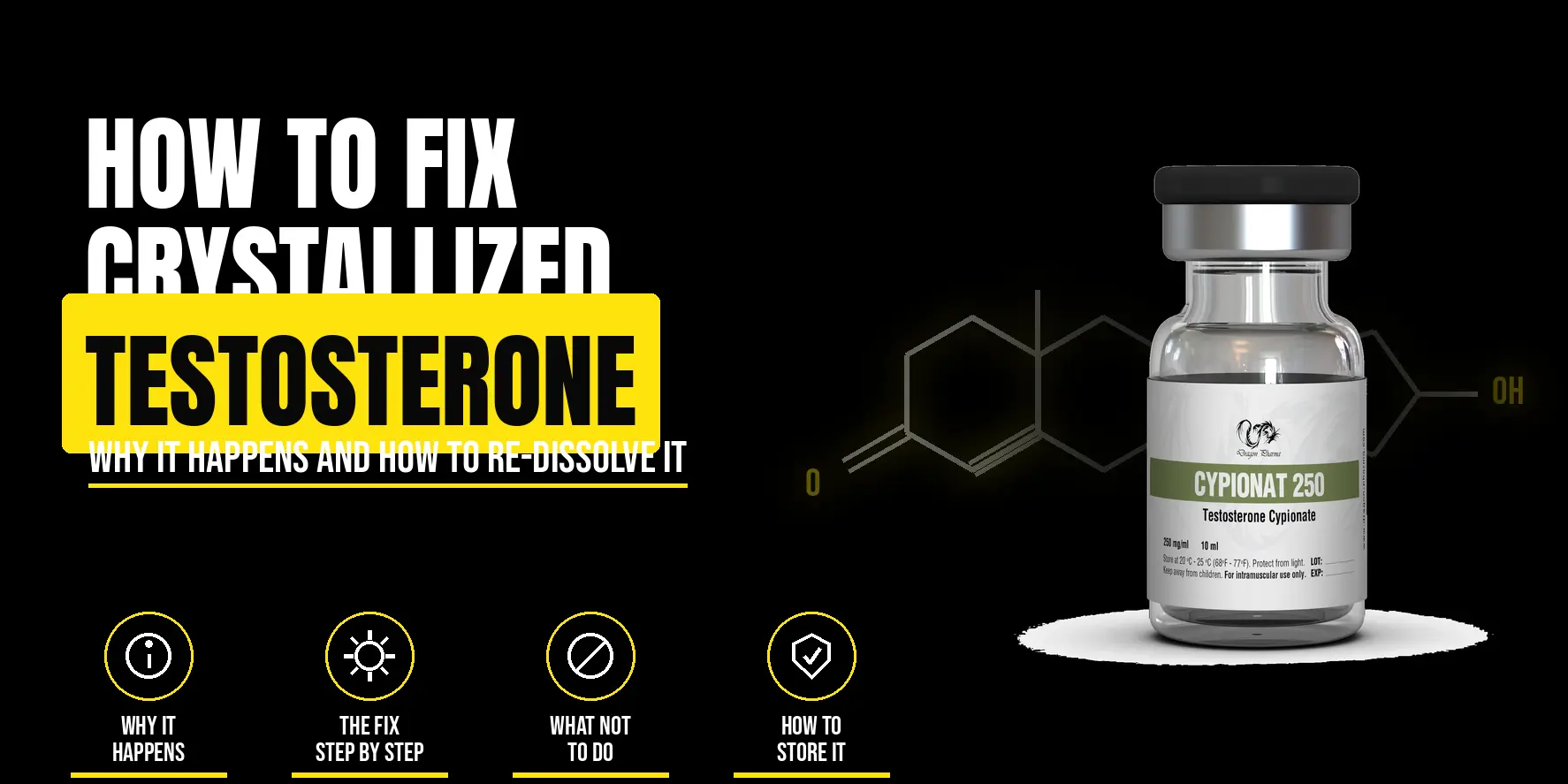
How to fix crystallized testosterone: the method below takes about fifteen minutes and needs nothing but warm water and a plastic bag.
PandaRoids Reviews
Please leave your review on products or service below.
For discounts, please contact us