


TB-500 Dosage: Loading, Maintenance and Reconstitution
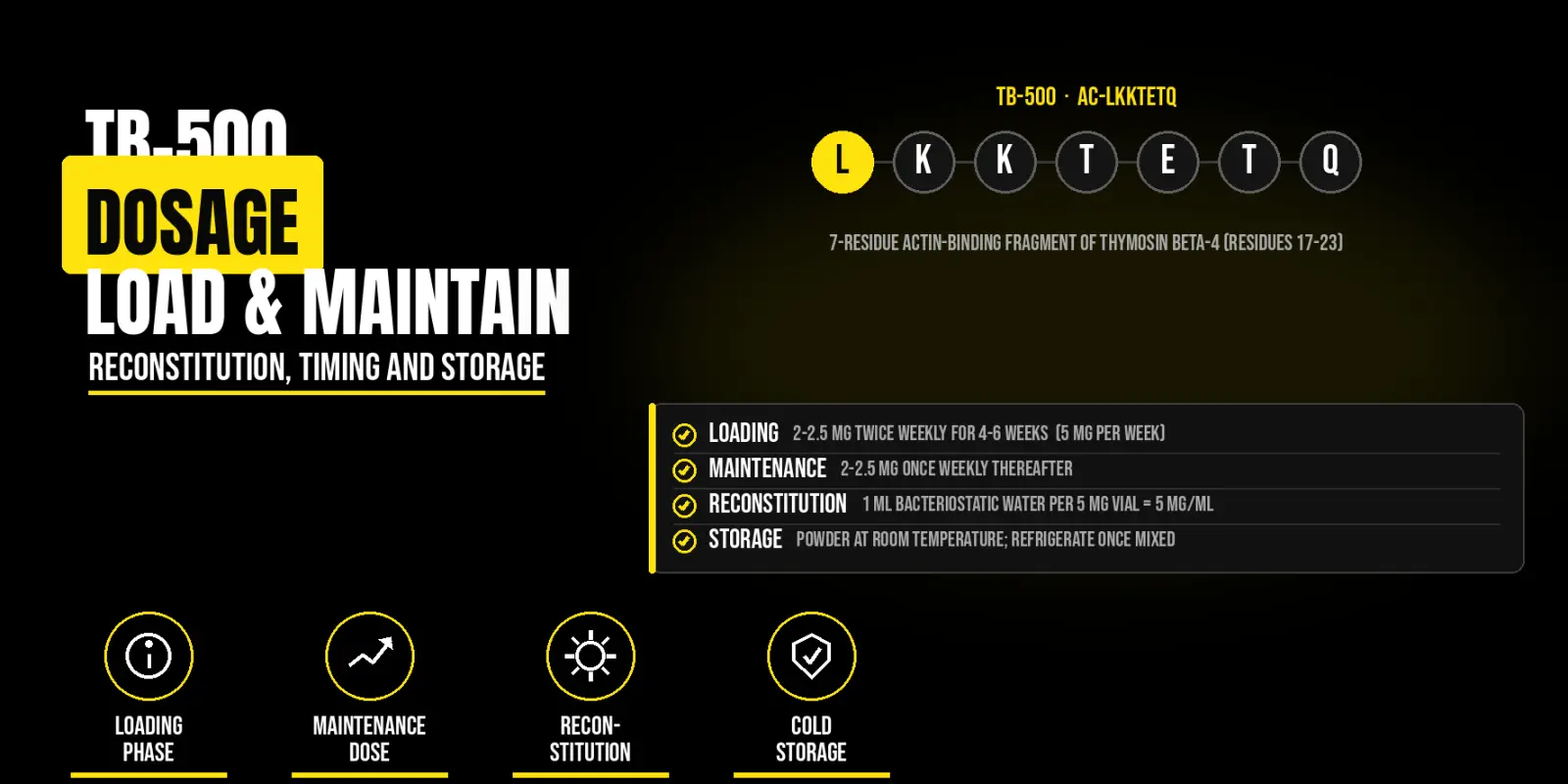
The protocol most commonly described is 2–2.5 mg subcutaneously twice weekly for 4–6 weeks, then 2–2.5 mg once weekly as maintenance. That works out to roughly 4–5 mg per week during the loading phase.
Worth noting before the numbers: TB-500 is not a steroid and does not build muscle. It is a repair peptide, and the dosing question is about tissue healing rather than performance.
What TB-500 actually is
TB-500 is a synthetic fragment of thymosin beta-4, a naturally occurring protein involved in cell migration and tissue repair. The peptide corresponds to the active region of the parent protein rather than the whole molecule.
It is supplied as a lyophilised (freeze-dried) powder and must be reconstituted with bacteriostatic water before use. The powder itself is stable at room temperature; the reconstituted solution is not.
The standard protocol
| Phase | Dose | Frequency | Duration |
|---|---|---|---|
| Loading | 2–2.5 mg | Twice weekly | 4–6 weeks |
| Maintenance | 2–2.5 mg | Once weekly | Ongoing |
| Topical (skin research) | 0.1–0.5 mg | Daily | As studied |
The two-phase structure exists because tissue repair is not a single event. The loading phase establishes circulating levels; maintenance sustains them at a lower weekly total.
A 5 mg vial lasts roughly one week during loading. At 2.5 mg twice weekly you are using 5 mg per week, so plan accordingly — a 4–6 week loading phase needs four to six vials, and the 2 ml (5 mg/ml) and 5 mg vial presentations are the standard formats.
Reconstitution
TB-500 is reconstituted with bacteriostatic water, not sterile water — the benzyl alcohol content is what keeps the solution from degrading between draws.
The arithmetic is straightforward once you know the concentration:
| Vial | Bacteriostatic water | Resulting concentration | Each 10 units (0.1 ml) |
|---|---|---|---|
| 5 mg | 1 ml | 5 mg/ml | 500 mcg |
| 5 mg | 2 ml | 2.5 mg/ml | 250 mcg |
| 5 mg | 5 ml | 1 mg/ml | 100 mcg |
So a 5 mg vial mixed with 1 ml of bacteriostatic water gives 5 mg/ml — and drawing an insulin syringe to the 10-unit mark delivers 500 mcg.
Add the water down the side of the vial, not directly onto the powder, and swirl gently rather than shaking. Shaking introduces air and can damage the peptide.
How much bacteriostatic water to mix with 5 mg works through the same calculation for another peptide if you want the method rather than the numbers.
Injection sites
TB-500 is administered subcutaneously or intramuscularly. Unlike some repair peptides, site-specific injection is not considered essential — the peptide acts systemically rather than only at the injection site.
Common subcutaneous sites: abdomen, upper arm, thigh. Rotate sites rather than repeatedly injecting the same spot.
Storage
· Powder, before reconstitution: room temperature, protected from light. Stable for the period stated on the vial.
· Reconstituted solution: refrigerate at 2–8 °C. Do not freeze.
· Protect from light in both states.
This is the opposite of oil-based injectables like testosterone, which must never be refrigerated. Getting the two backwards degrades the product either way.
What the evidence actually shows
TB-500 and its parent protein thymosin beta-4 have a substantial preclinical literature on tissue repair, wound healing and musculoskeletal regeneration — largely animal studies. A 2026 scoping review mapped the evidence on TB-4 and TB-500 in tissue healing and found the research concentrated in preclinical work.
What that means practically: the mechanism is plausible and the animal data is real, but there is no established human dosing. The protocol above describes what is commonly used, not what has been validated in trials.
Treat any claim about TB-500 with more confidence than the evidence supports — including the widely repeated suggestion that it promotes hair growth. That claim rests on topical application studies rather than established clinical use.
FAQ
What is the standard TB-500 dosage?
2–2.5 mg subcutaneously twice weekly for 4–6 weeks as a loading phase, then 2–2.5 mg once weekly for maintenance.
How much bacteriostatic water do I mix with a 5 mg TB-500 vial?
1 ml gives a concentration of 5 mg/ml, so each 10 units (0.1 ml) on an insulin syringe delivers 500 mcg. More water gives a weaker concentration and finer dosing control.
How long does a 5 mg vial last?
About one week during the loading phase at 2.5 mg twice weekly. A 4–6 week loading phase therefore needs four to six vials.
Is TB-500 a steroid?
No. TB-500 is a synthetic fragment of the protein thymosin beta-4. It has no structural relationship to anabolic-androgenic steroids and does not act on the androgen receptor.
Does TB-500 build muscle?
No. It is a tissue-repair peptide. Any indirect effect on training would come from recovering better from injury, not from muscle protein synthesis.
How often should TB-500 be injected?
Twice weekly during loading, once weekly for maintenance. It is not a daily peptide.
Does TB-500 need to be refrigerated?
The powder does not. The reconstituted solution does — store it at 2–8 °C after mixing, and do not freeze it.
Where do you inject TB-500?
Subcutaneously or intramuscularly, at any standard site — abdomen, thigh or upper arm. Site-specific injection is not considered necessary because the peptide acts systemically.
How long does TB-500 take to work?
Users typically describe effects over weeks rather than days, consistent with a tissue-repair mechanism rather than a symptomatic one. There is no clinical trial data establishing a timeline.
Where to buy TB-500
PandaRoids stocks TB 500 by Dragon Pharma — a 2 ml vial at 5 mg/ml, supplied as lyophilised powder for reconstitution, alongside the wider peptide range.
For the pharmacokinetics side — how long it stays active and why the protocol is structured as it is — how long BPC-157 stays active covers the same questions for a comparable repair peptide.
Products on this site are supplied for laboratory research purposes only — not for human or veterinary use.
This article is educational and is not medical advice. TB-500 is not approved for human use in any jurisdiction.
References
· McGuire F, et al. "Thymosin Beta-4 and TB-500 in Tissue Healing, Regeneration and Musculoskeletal Repair: A Scoping Review." 2026.
· Community research protocols for TB-500: 2–2.5 mg twice weekly loading, 2–2.5 mg weekly maintenance.
· Guidance on bacteriostatic water for reconstitution of lyophilised peptides.
Articles
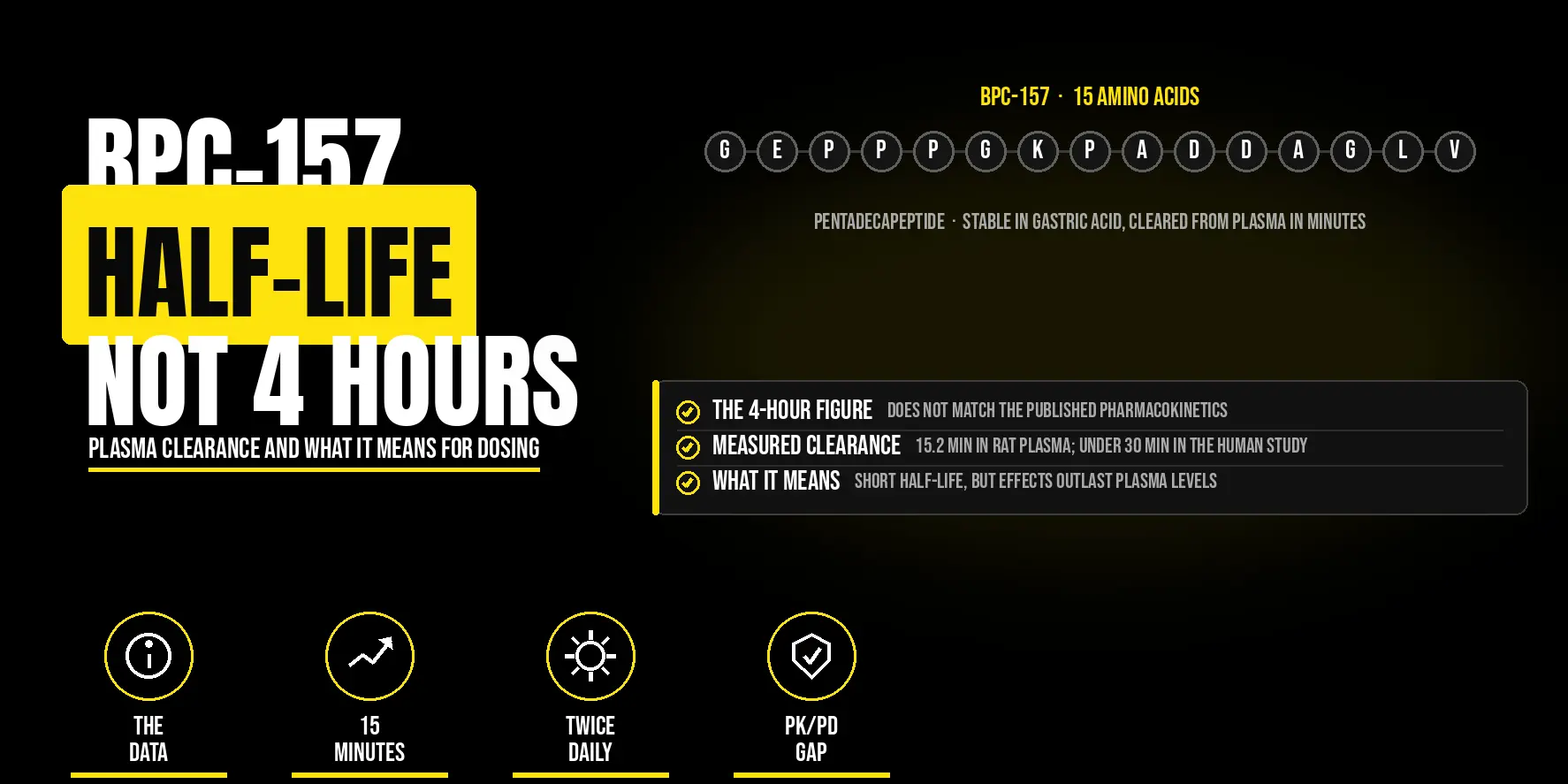
BPC-157's plasma half-life is measured in minutes, not hours. The primary pharmacokinetic study found an average elimination half-life of 15.2 minutes in rats, and the same work reports a confirmed half-life of under 30 minutes across the animal species studied and in the one available human study.
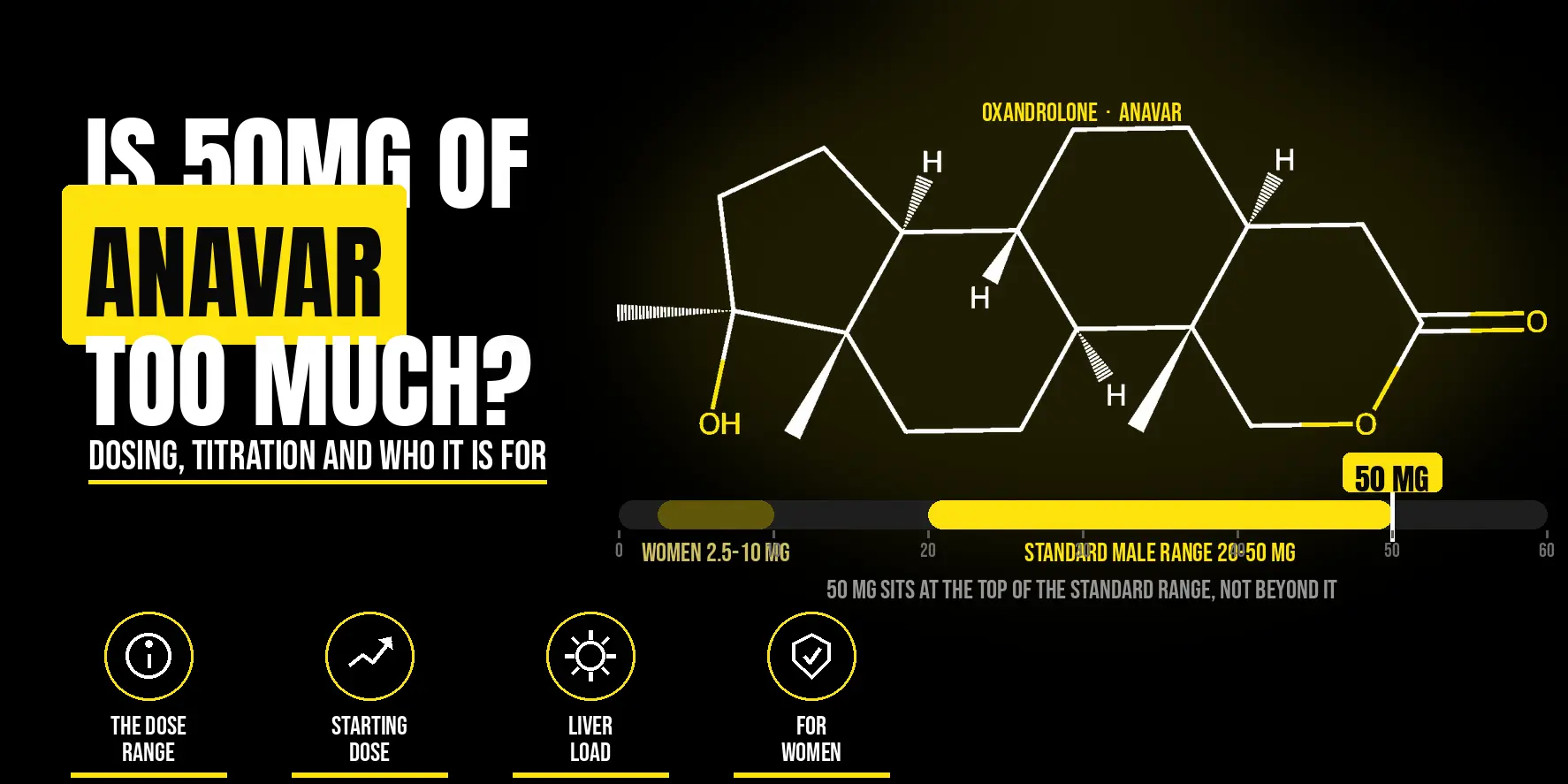
The useful answer depends on who is asking and what they are comparing it to. Below: where 50 mg sits on the dose range, why titration matters, and the liver and lipid considerations that come with any oral Anavar dose.
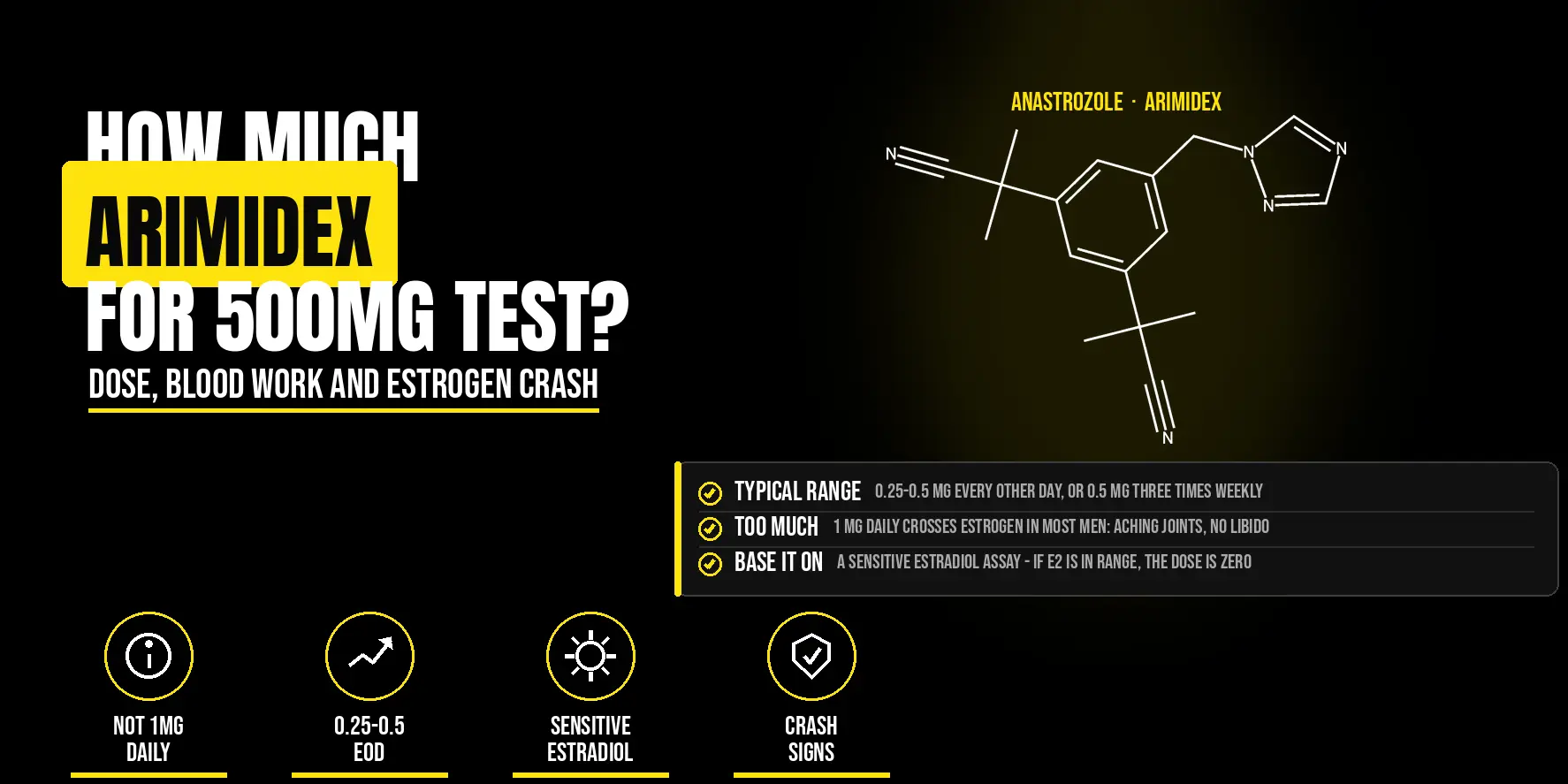
That said, the range most protocols land in is 0.25–0.5 mg of anastrozole every other day, or 0.5 mg three times weekly. What you should not do is take 1 mg daily.
PandaRoids Reviews
Please leave your review on products or service below.
For discounts, please contact us
- Great first experience. Shipping arrived in a week and half. Faster then I thought it would. Ordering process is a small inconvenience for being dependable. Will definitely order again. Great communication with order processing.
- good